

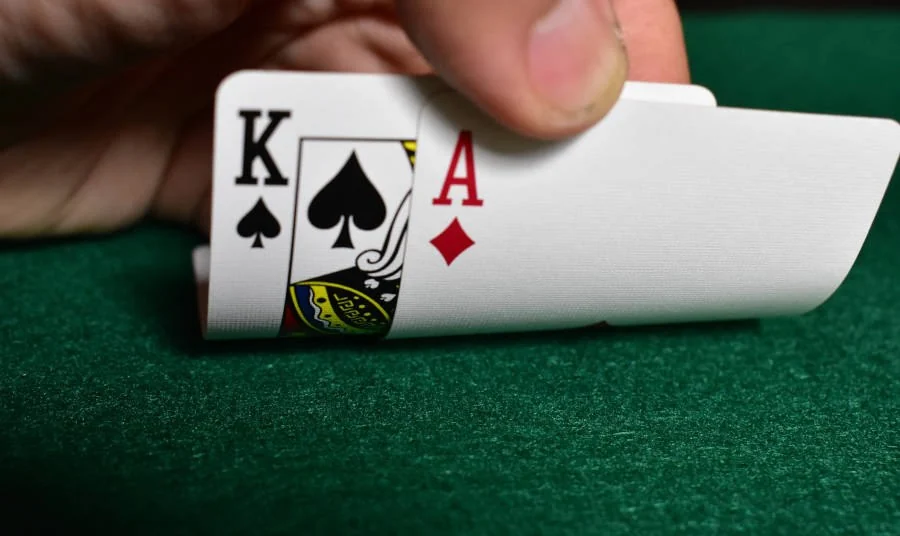
Standard blackjack has long reigned as the benchmark of casino table gaming because disciplined players using mathematically sound basic strategy can compress the house edge to a fraction of a percent. Yet for experienced players who have spent hundreds of hours executing the same mechanical decisions—splitting eights, doubling eleven against a dealer five, and standing on hard seventeen—the classic game can eventually feel predictable. To inject fresh excitement and test the adaptability of seasoned table game enthusiasts, casino developers over the decades have introduced variants that fundamentally reshape the rules of twenty-one.
Rather than merely tacking on volatile side bets with steep house advantages, games like Spanish 21, Blackjack Switch, and Double Exposure alter the core architecture of the deal. Each variant dangles an extraordinary player perk that sounds almost recklessly generous at first glance: guaranteed payouts on twenty-ones, the ability to swap cards between two independent hands, or the privilege of seeing both dealer cards before making a move. However, the house never surrenders mathematical ground without exacting a price. Behind every tantalizing perk lies a carefully engineered counterweight designed to preserve the casino’s operational margin.
Navigating these variants successfully requires stripping away standard blackjack assumptions and understanding the exact trade-offs that govern each layout.
Spanish 21: Stripping the Tens for Outrageous Player Perks
Debuting in gaming pits during the mid-1990s, Spanish 21 remains the most commercially successful and enduring offshoot of traditional blackjack. When players first encounter the table, the rules read like a gambler’s wish list. Yet the game operates on a mathematical premise that completely alters hand probabilities before the first chip is even wagered.
Spanish 21 is dealt using a Spanish shoe composed of forty-eight-card decks. Every standard ten-spot card has been systematically removed, leaving behind the picture cards—jacks, queens, and kings—alongside the aces through nines. To anyone familiar with card counting or the mechanics of twenty-one, the immediate removal of twenty-four valuable ten-value cards across a six-deck shoe sounds catastrophic. Tens form the backbone of player-friendly outcomes; their absence diminishes the frequency of natural blackjacks, weakens double downs, and makes the dealer significantly less prone to busting on stiff starting totals.
To offset this massive intrinsic disadvantage, the game showers the player with an array of rules and bonuses that tilt the odds back toward equilibrium.
The Compensating Mechanics of the Spanish Deck
The cornerstone rule of Spanish 21 is absolute: a player twenty-one always wins, instantly beating a dealer twenty-one, even if the dealer draws to twenty-one with fewer cards. Similarly, a player natural blackjack always beats a dealer blackjack, paying out at the full 3:2 ratio rather than pushing.
Beyond the automatic wins on twenty-one, the rulebook grants players unprecedented structural freedom:
-
Late Surrender and Double Down Rescue: Players may surrender their original wager after seeing their first two cards against a dealer upcard. Even more advantageous is the rescue option, which allows a player who doubles down and receives an unfavorable card to surrender their original wager while retrieving the doubled portion.
-
Unrestricted Doubling and Splitting: Players can double down on any number of cards, not merely their initial two-card holding. Furthermore, they can redouble up to three or four times at certain venues, split aces repeatedly, and draw multiple cards to split aces.
-
Tiered Payout Bonuses: Drawing to a twenty-one using five cards pays 3:2, a six-card twenty-one pays 2:1, and a seven-or-more card twenty-one pays 3:1. Specific combinations, such as 6-7-8 or 7-7-7 of mixed, matching, or suited varieties, award escalated payouts that can reach up to 3:1 or even trigger fixed jackpots without requiring an additional side bet.
Strategic Adjustments for Spanish 21
You cannot sit at a Spanish 21 table and execute traditional basic strategy without watching your bankroll bleed away. Because the shoe lacks pure tens, drawing low cards is considerably more common, which means you bust far less often when hitting stiff totals like hard fourteen, fifteen, or sixteen.
Simultaneously, the tiered bonuses for multi-card twenty-ones completely alter marginal decisions. For example, while standing on a hard fourteen or fifteen against a dealer four, five, or six is standard protocol in traditional blackjack, Spanish 21 strategy frequently instructs players to hit three-card or four-card soft hands and certain stiff holdings to pursue bonus payouts. Players must also leverage the double down rescue aggressively, pulling back their supplemental wager whenever a doubled hand resolves into an unwinnable total against a strong dealer showing. When played with pristine variant strategy, Spanish 21 actually boasts a house edge lower than many standard multi-deck games on the Las Vegas Strip.
Blackjack Switch: The Art of Trading Top Cards
Patented at the turn of the millennium by British card counter and gaming inventor Geoff Hall, Blackjack Switch tackles one of the most frustrating experiences in card playing: looking down at two separate, thoroughly unplayable starting hands. Hall conceived the concept after repeatedly receiving disparate holdings that would have formed extraordinary totals had he been allowed to interchange their cards.
In Blackjack Switch, every player must place two equal wagers across two adjacent betting spots for each round. The dealer distributes two distinct hands to each seat, dealing all cards face up. Before any hits, doubles, or splits take place, the player has the unilateral option to switch the second card dealt to each hand.
Consider being dealt a five and a ten on your first hand for a clumsy fifteen, while your second hand receives an ace and a six for a soft seventeen. In standard blackjack, both hands represent awkward, defensive spots. In Blackjack Switch, you can swap the ten and the six. Your first hand becomes an eleven (five and six), priming you for an optimal double down. Your second hand becomes an ace and a ten—an instant twenty-one.
The House Counterbalance: The Dreaded Push on 22
Allowing players to manufacture ideal starting hands at will represents an enormous statistical advantage. To keep the casino from facing a negative expectation, Hall introduced a counter-rule that initially shocks unfamiliar players: a dealer total of twenty-two is not a bust.
Instead, when the dealer draws to a total of twenty-two, the round is ruled a push against any active player hand on the felt, regardless of whether that hand holds a nineteen, twenty, or non-switched twenty-one. The only hand that defeats a dealer twenty-two is a natural blackjack formed on the original deal prior to switching.
To further balance the ledger, natural blackjacks pay out at even money (1:1) rather than the customary 3:2 or 6:5 ratios found elsewhere on the casino floor.
Mastering the Switch Decision
The greatest trap in Blackjack Switch is making intuitive, visually appealing switches that are mathematically counterproductive. Novice players often cannibalize one solid hand to create a single exceptional total, leaving themselves vulnerable to the dealer’s drawing power.
Optimal strategy dictates balancing hand strength across both positions. Converting two mediocre totals into two decent, playable holdings—such as two eighteens—is often statistically superior to manufacturing one twenty while leaving the companion hand as an unrecoverable hard twelve.
Furthermore, because the dealer pushes on twenty-two, the baseline value of standing on stiff hands collapses. In standard blackjack, you routinely stand on hard twelve through sixteen against a dealer bust card like a five or six, anticipating that the dealer will break. In Blackjack Switch, because the dealer safely recycles through a twenty-two, those dealer busts occur far less frequently. As a consequence, players must hit their own stiff hands more aggressively and execute fewer marginal double downs.
Double Exposure: Total Information with Tight Strings Attached
Also marketed historically as Face Up 21 or Dealer Disclosure, Double Exposure eliminates the central psychological tension of table games: the mystery of the dealer’s hidden hole card.
From the opening deal, both dealer cards are dealt fully exposed. There are no peek procedures, no wondering whether an upcard six conceals an ace or an eight, and no defensive guessing games. If the dealer displays an eighteen, you know with absolute certainty that your seventeen is a loser unless you take a card. If the dealer shows a sixteen, you know they must draw and risk busting under mandatory table dealing rules.
This total transparency completely removes the informational fog of war, giving players perfect clarity on every single hand. However, to compensate for granting complete visibility, casinos impose some of the strictest condition adjustments found anywhere on the floor.
How the House Reclaims Its Edge
Total information would bankrupt a casino within hours under conventional rules. To restore the mathematical house advantage, Double Exposure strips away several fundamental player protections:
-
The Dealer Wins All Ties: In standard play, matching the dealer’s final score results in a push, preserving your original wager. In Double Exposure, the house claims all ties on totals from seventeen through twenty-one. If both you and the dealer finish with an eighteen, the dealer takes your chips.
-
Even Money on Blackjacks: A player natural blackjack pays strictly 1:1. The absence of the traditional 3:2 premium removes a massive chunk of player expected value.
-
Restricted Doubling and Splitting: Most casinos prohibit doubling down after splitting, restrict doubling strictly to hard totals of nine, ten, or eleven, and eliminate late surrender entirely.
Navigating the Open-Book Table
Operating under Double Exposure rules requires a total rewiring of basic strategy instincts. Because ties lose, the definition of an acceptable hand shifts entirely depending on what the dealer displays.
When the dealer shows a pat hand of eighteen, nineteen, or twenty, conventional hand management goes out the window. If you hold a hard nineteen and the dealer shows a twenty, standing guarantees a loss. You are mathematically forced to hit your nineteen in search of a two, an ace, or a miracle sequence, because a tiny chance of improving is strictly better than an absolute certainty of surrender.
Conversely, when the dealer displays a hard twelve, thirteen, fourteen, fifteen, or sixteen, player strategy becomes exceptionally conservative. You will stand on totals as low as hard twelve, thirteen, or fourteen without hesitation, refusing to risk busting your own hand when you know the dealer is legally obligated to draw from a compromised position. The game strips away nuanced gray areas and transforms twenty-one into a stark, binary exercise in threshold targeting.
Comparative Breakdown: Choosing Your Best Variant
Selecting among these three alternatives comes down to what kind of tactical challenge you enjoy and how much strategic homework you are willing to undertake.
| Game Variant | Defining Player Perk | Primary House Counterweight | Approximate House Edge (Optimal Play) | Best Suited For |
| Spanish 21 | Player 21 and blackjack always win; late rescue; tiered payout bonuses | All four standard 10s removed from every deck in the shoe | 0.40% to 0.75% | Deep strategists who enjoy complex multi-card decisions and long session stamina |
| Blackjack Switch | Ability to swap top cards between two independent starting hands | Dealer 22 pushes against all active player hands; 1:1 blackjack payouts | 0.55% to 0.60% | Puzzle solvers who like creative hand manipulation and paired-risk evaluation |
| Double Exposure | Both dealer cards are dealt face up for 100% visible information | House wins all non-blackjack ties; 1:1 blackjack payouts | 0.65% to 1.20% | Players who despise hidden dealer cards and prefer straightforward, binary hit-or-stand choices |
Spanish 21 offers the lowest theoretical house edge of the three, frequently outperforming traditional shoe games when played according to its dedicated basic strategy chart. However, its strategy matrix is noticeably more complicated than standard blackjack, demanding careful attention to card counts, hand lengths, and specific bonus payouts.
Blackjack Switch delivers the highest entertainment value for players who enjoy tactile involvement and spatial problem-solving. Calculating whether a switch yields a net positive outcome across two separate positions introduces a captivating layer of skill, though accepting a push on twenty-two can be psychologically jarring for purists.
Double Exposure provides immediate gratification and a dramatic reduction in table stress by removing the unknown. However, because ties lose, the house edge is generally the highest among the three variants, and the gameplay can feel rigid once you realize that the open cards severely limit creative maneuvering.
Approaching any of these variants as though they were standard twenty-one is the most reliable way to forfeit your bankroll. Each game represents a distinct mathematical ecosystem with its own rhythm, vulnerabilities, and strategic demands. By respecting the trade-offs built into the felt, you can look past the surface novelties and exploit the genuine advantages each variation has to offer.