

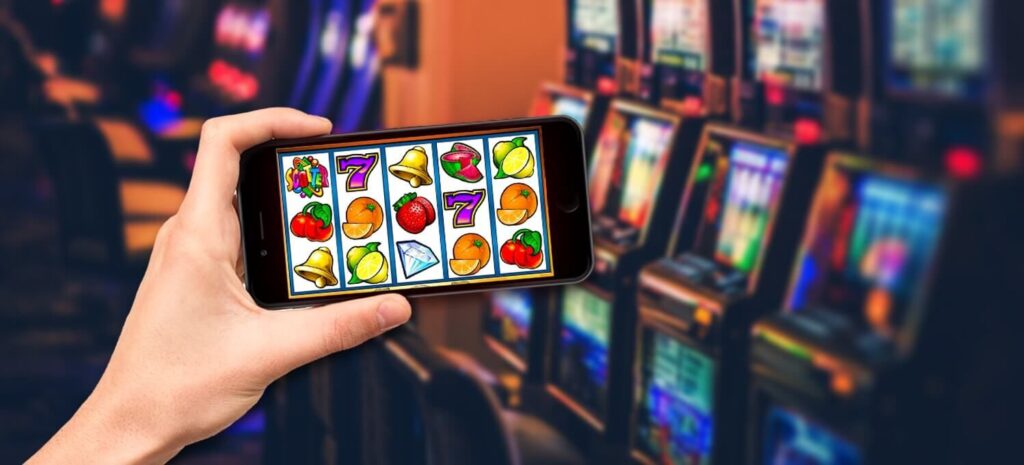
The transition of digital slot games from desktop monitors to handheld screens represents one of the most demanding engineering evolutions in modern digital entertainment. In the early days of mobile internet, porting a casino game to a smartphone typically meant shrinking a desktop Flash application until the text was barely legible and the interactive buttons were impossible to hit accurately. Players had to pinch, zoom, and endure erratic frame rates on devices that were never designed to process complex visual math.
Today, mobile slot development is an entirely distinct discipline. Modern titles are built from the ground up to exploit the physical properties of mobile hardware. By harmonizing tactile ergonomics with high-density visual rendering, developers have turned smartphones into dedicated gaming hubs capable of running experiences that rival standalone consoles in sharpness and responsiveness. Achieving this balance requires solving two interconnected technical challenges: optimizing the physical interaction layer through touchscreen engineering and delivering high-definition graphics without crippling system memory or battery life.
Ergonomic Architecture: Designing for the Human Hand
Designing for mobile devices requires acknowledging a fundamental constraint: players interact with the software through their thumbs and index fingers, not a high-precision mouse pointer. This physical reality dictates every interface decision, from the size of interactive elements to their placement across the glass surface.
Mapping the Physical Thumb Zone
The primary metric in mobile interface design is the natural reach of the thumb during one-handed and two-handed grips. In portrait mode, which represents the preferred orientation for the vast majority of mobile players navigating games in transit, the lower third of the screen provides the highest ergonomic comfort. Placing a critical control, such as the spin trigger, in the upper-right corner forces the user into an awkward hand repositioning that leads to fatigue over extended play sessions.
Developers accommodate this by anchoring the primary action controls within a curved sweep across the bottom of the display. Secondary functions, such as bet configuration, paytable directories, and audio settings, are relegated to the peripheral zones or tucked into collapsible slide-out trays. By establishing a strict hierarchy between continuous actions and occasional configurations, the game screen remains uncluttered, maximizing the visible area reserved for the reels themselves.
Touch Targets and Gesture Mechanics
A finger tap lacks the pixel-level precision of a desktop cursor. Mobile software standards require interactive touch targets to measure at least forty-eight square pixels to prevent misclicks. In high-tempo slot games, missing a button or unintentionally triggering an unwanted bet level degrades trust instantly. Studios resolve this through generous hit-box padding, where the invisible clickable boundary of a button extends slightly beyond its visual artwork.
Beyond static tapping, developers have embraced natural swipe and hold gestures. Swiping downward on a reel set to initiate a spin mimics the mechanical pulling of a traditional slot machine lever, creating a visceral sense of agency. Similarly, long-press mechanics allow players to toggle rapid-play modes or inspect specific symbol values without navigating away from the core game board.
The Role of Haptic Engines
Visual and auditory stimuli are only two parts of the sensory equation. The introduction of advanced haptic actuators in modern smartphones has unlocked the dimension of touch. Unlike generic, jarring vibration motors from older hardware generations, linear resonant actuators produce precise, localized micro-vibrations.
When an interface designer pairs a crisp, three-millisecond tactile click with the visual settling of a bonus symbol, the digital display feels surprisingly mechanical. Subtle haptic pulses provide instant physical feedback that confirms an input has registered, eliminating the uncertainty that often occurs on flat, unresponsive glass screens. This tactile dimension anchors the user in the moment, making digital reels feel physical, weighted, and substantial.
High-Definition Rendering on Compact Displays
While touchscreen optimization governs how a player interacts with a game, the visual pipeline dictates how deeply they are drawn into its presentation. Modern mobile displays feature pixel densities exceeding four hundred pixels per inch, boasting OLED and Super AMOLED panels capable of infinite contrast ratios and rich color gamuts. Operating at this fidelity introduces significant technical friction.
Scalable Assets and Texture Compression
Rendering high-resolution artwork on a compact screen is an exercise in asset management. If a studio builds a game using uncompressed, raw bitmap images, the game package swells to hundreds of megabytes, creating long initial loading screens that frustrate players on cellular connections. Conversely, using overly compressed files introduces blurry edges, color banding, and visual artifacts that look glaringly poor on a high-definition Retina-grade display.
To solve this, developers leverage modern WebGL rendering frameworks alongside advanced texture compression formats such as Adaptive Scalable Texture Compression (ASTC). These formats allow graphics processing units to decompress visual assets directly in hardware memory rather than passing them through the main system processor. High-resolution textures remain crisp while consuming a fraction of the bandwidth, ensuring rapid load times and fluid memory allocation.
Dynamic Resolution and Visual Scaling
Unlike desktop computers that operate across a predictable handful of widescreen resolutions, the mobile device market is deeply fragmented. Smart devices feature radically different aspect ratios, curved edges, camera cutouts, and folding displays. A static design approach simply cannot function across this spectrum.
Modern slot engines use responsive rendering pipelines that dynamically adjust layout geometry based on the screen’s physical dimensions. Vector-based interface elements scale mathematically without loss of clarity, ensuring that text, borders, and UI icons look identical on an entry-level smartphone and a premium twelve-inch tablet. When orientation shifts from portrait to landscape, the canvas reflows instantly: the reels expand horizontally, control clusters shift to the sides to support two-handed thumb operation, and background environmental artwork reveals wider panoramic detail.
Real-Time Lighting, Shaders, and Particle Effects
Modern mobile slot games have evolved far beyond the flat, two-dimensional sprite animations of the past. Today’s titles routinely feature three-dimensional symbol models illuminated by real-time vertex shaders, simulated metallic reflections, and sophisticated particle systems.
During high-energy sequences, such as cascading symbol wins or progressive jackpot celebrations, the display might render hundreds of individual light-emitting elements simultaneously. Software engineers optimize these bursts through sprite instancing, a technique that commands the graphics chip to draw dozens of identical particles in a single batch call rather than overloading the processor with separate rendering instructions. This allows complex visual flourishes to execute smoothly without causing visible stutter.
Engineering for Stability: Thermal and Battery Management
A game can feature pristine visual assets and intuitive touch controls, but if it exhausts twenty percent of a phone’s battery within ten minutes or causes the chassis to heat up uncomfortably, the user experience collapses. Mobile performance optimization is fundamentally a battle against thermal throttling and power consumption.
Frame Pacing and Refresh Rates
Many modern flagship devices feature dynamic refresh displays capable of reaching ninety or one hundred and twenty hertz. While higher refresh rates make animations appear remarkably fluid, running complex graphics at maximum frame rates continuously puts immense strain on mobile batteries.
Engineers address this by implementing dynamic frame pacing. During high-speed visual sequences, such as spinning reels or dynamic transition cinematics, the engine targets a rock-solid sixty frames per second to preserve fluid movement. When the game returns to an idle state awaiting player input, the rendering loop throttles down to lower frequencies. This variable pacing drastically reduces overall energy draw while maintaining an impression of effortless performance.
Asynchronous Data Management
Mobile players routinely transition between reliable home broadband and fluctuating cellular towers. An unstable network connection cannot be allowed to freeze the local visual rendering.
Modern game engines decouple the visual and animation layers from the backend data requests. The actual calculation of an outcome occurs on secure servers within milliseconds, transmitting a tiny cryptographic data payload back to the device. Meanwhile, the client-side software plays out smooth, pre-rendered physics animations locally. If a momentary packet drop occurs, the game client buffers gracefully without crashing, resuming the visual payout cycle the microsecond the signal reconnects.
The Convergence of Touch and Sight
The evolution of mobile slot mechanics proves that high visual fidelity and responsive ergonomics cannot exist in isolation. An ultra-high-definition game that ignores thumb reach feels clumsy and tiring to navigate, while a flawlessly mapped touch interface paired with low-resolution assets looks dated and uninspired.
By unifying specialized graphic compression pipelines, adaptive responsive layouts, and precision touch feedback, developers have elevated mobile slot titles into sophisticated pieces of portable software. The resulting games deliver frictionless interaction, instantaneous visual clarity, and an immersive environment that honors the capabilities of modern handheld technology.